
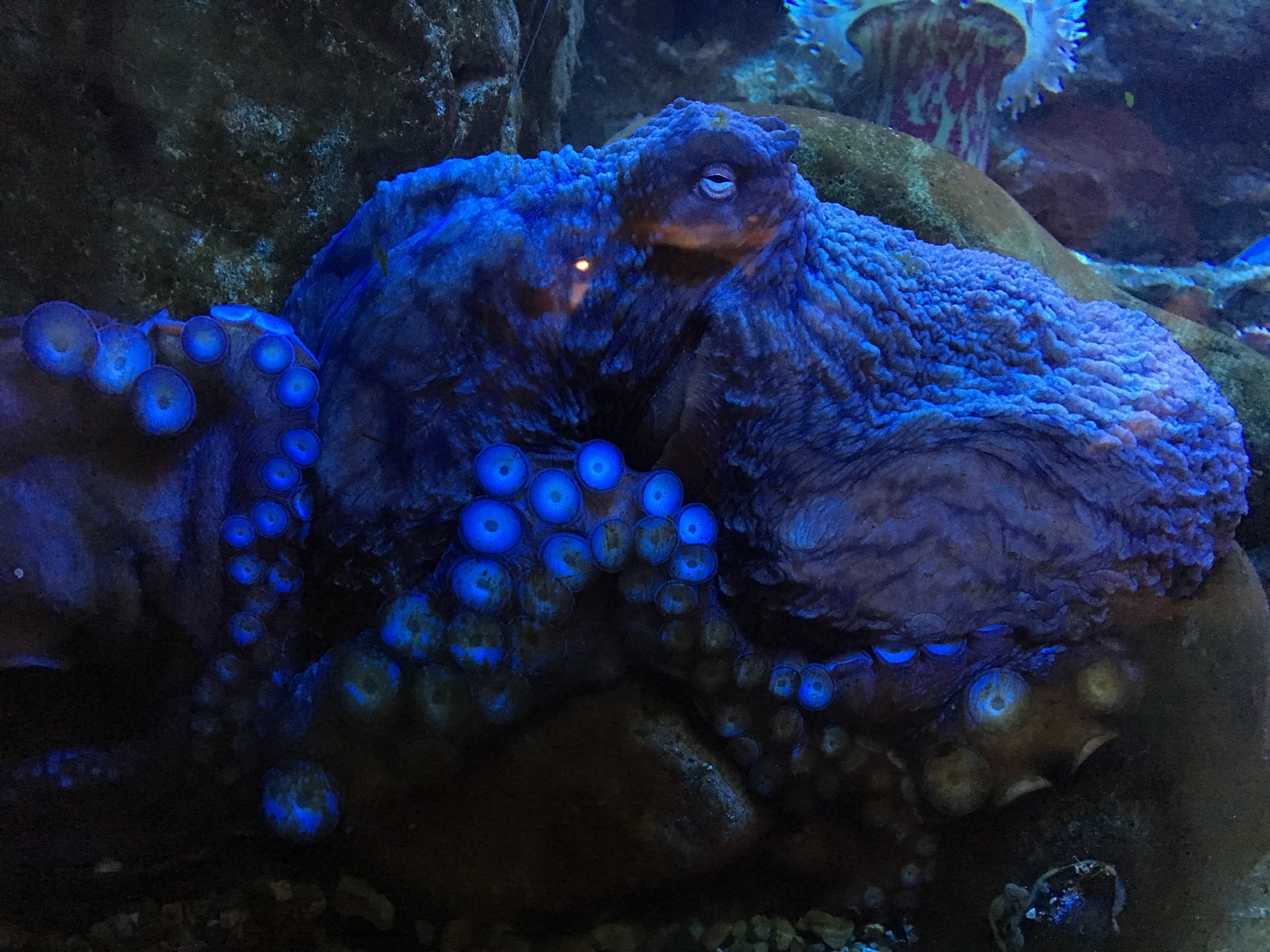
Octopuses change color mainly for camouflage; some species also display warning patterns when threatened. Chromatophores, pigment-filled skin cells controlled by nerves and muscles, enable rapid changes in color and pattern. Sleeping octopuses have also been observed changing color during active sleep, but the patterns do not show whether the animals are dreaming.
Watch the PBS Nature clip “Octopus Dreaming,” published October 2, 2019, as David Scheel narrates the color shifts of a sleeping octopus named Heidi:
A 2021 study of four adult Octopus insularis described alternating quiet and active sleep. During active sleep, the animals rapidly changed skin color and texture and showed rapid eye movements. A 2023 study of Octopus laqueus found that active-sleep skin patterns and neural activity resembled waking. Neither study establishes whether octopuses dream.
What do you notice about Heidi’s color and pattern changes?
Picture credit: Pexels.com




Hi there! I’m Aaram, the founder of Sciencera. I grew up in the beautiful city of Thiruvananthapuram in the Southern part of India, famous for its pristine beaches. Now, I am a scientific writer based in Indianapolis. When I am not busy procrastinating on my writing, poring through research articles, or coming up with grand ideas to save the planet, I love playing soccer and chess. I read a bit and write sporadically when caffeinated to the right amount. I am passionate about scientific research, writing, and outreach activities.